


Introduction
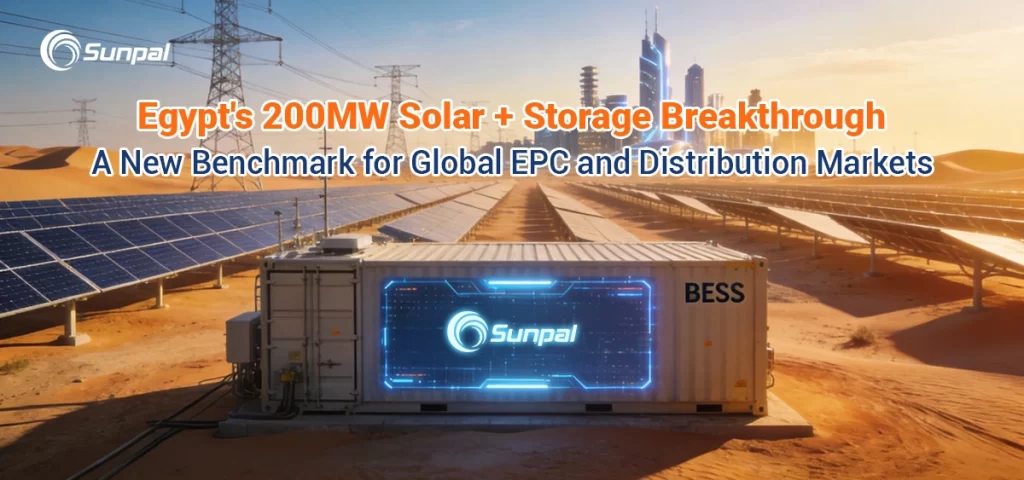
Le Banque européenne pour la reconstruction et le développement (BERD) a accordé un prêt relais de construction de $65 millions à HAU Energy pour un projet photovoltaïque de 200 MW associé à un système de stockage d'énergie par batterie (BESS) de 120 MWh, situé dans l'emblématique parc solaire de Benban, près d'Assouan, en Égypte. Développé en collaboration avec Infinity Power, ce projet à grande échelle combinant énergie solaire et stockage représente une avancée significative dans la réalisation des ambitions de l'Égypte en matière d'énergies renouvelables.
Alors que les financements internationaux affluent dans le secteur solaire nord-africain, le projet crée des opportunités intéressantes pour les contractants mondiaux EPC, les distributeurs et les fournisseurs de technologies sur le marché en pleine expansion du solaire associé au stockage.
Aperçu du projet et spécifications techniques
Ce projet phare ajoutera 200 MW de capacité solaire photovoltaïque et 120 MWh de stockage par batterie directement au sein du parc solaire de Benban, l'une des plus grandes installations solaires au monde. Situé dans le gouvernorat d'Assouan, en Haute-Égypte, le site bénéficie de ressources solaires exceptionnelles, avec un ensoleillement horizontal mondial dépassant souvent 2 300 kWh/m² par an, ce qui favorise une production à haut rendement et d'excellents facteurs de capacité.
Points saillants du projet :
- Capacité : 500 MW solaire PV + 120 MWh BESS (environ 2-4 heures de durée de stockage)
- Développeur : HAU Energy (en partenariat avec Infinity Power)
- Financement : Prêt relais de $65 millions accordé par la BERD pour la phase EPC
- Impact attendu : Production annuelle significative d'énergie propre et jusqu'à des centaines de milliers de tonnes d'émissions de CO₂ évitées
- Rôle : Fournir une énergie renouvelable pilotable, améliorer la stabilité du réseau et démontrer la viabilité des systèmes hybrides dans des environnements désertiques à fort ensoleillement
Le composant BESS est particulièrement stratégique. Il permet le décalage temporel de l'énergie pour répondre à la demande de pointe du soir, assure la régulation de fréquence et les services auxiliaires, et atténue les risques d'écrêtement courants dans les réseaux à forte pénétration solaire. Pour les EPCistes mondiaux, la conception intégrée nécessite une expertise approfondie en optimisation de systèmes hybrides, y compris des systèmes de conversion de puissance avancés, des logiciels SCADA et de gestion d'énergie, des algorithmes de contrôle sophistiqués et une gestion thermique robuste adaptée aux conditions extrêmes des déserts où les températures peuvent dépasser 45°C.
Les activités de construction sont axées sur le périmètre EPC complet : conception technique détaillée, acquisition de Modules solaires bifaciaux haut rendement, de rang 1 et solutions de BESS conteneurisées ou modulaires, ouvrages civils adaptés aux terrains sableux, installation de structures de montage ou de trackers, et travaux complets d’interconnexion au réseau. Le projet s’inscrit dans le calendrier accéléré de déploiement des énergies renouvelables de l’Égypte et dans ses programmes d’urgence visant à augmenter rapidement la capacité d’énergie propre.
☀️ Décryptage du projet solaire avec stockage d'Aswan de 200 MW
Un regard plus approfondi sur le projet phare égyptien de développement solaire hybride et de stockage par batterie.
Répartition de la capacité du projet
Chronologie du projet
📍 Situation stratégique
Parc solaire de Benban, Gouvernorat d'Assouan, Égypte
Situé dans l'un des plus grands parcs solaires du monde (~1,8 GW de capacité existante), le projet bénéficie d'un ensoleillement exceptionnel dépassant 2 300 kWh/m²/an, ce qui en fait l'un des sites solaires et de stockage à l'échelle utilitaire les plus attrayants du Moyen-Orient et d'Afrique du Nord.
Ce projet étend non seulement le complexe de Benban, mais sert également de modèle pour les futurs développements hybrides, en soulignant l'intégration transparente des parcs photovoltaïques avec des systèmes de stockage au lithium-ion (en particulier LiFePO4) pour une fiabilité et une performance maximales.
Contexte et moteurs politiques du marché solaire avec stockage en Égypte
L'Égypte connaît actuellement une profonde transformation énergétique, portée par une croissance rapide de la demande en électricité (de l'ordre de 6 à 71 TP3T par an) et par la nécessité de diversifier son approvisionnement afin de réduire la dépendance au gaz naturel. Le gouvernement a révisé son Stratégie intégrée d'énergies durables à la hausse, avec pour objectif d'atteindre 42% d'énergies renouvelables dans le mix électrique d'ici 2030, le solaire devant y contribuer à hauteur d'environ 24%. Les objectifs à plus long terme visent une part de plus de 60% d’énergies renouvelables d’ici 2040, soutenue par des investissements privés massifs qui devraient atteindre $10 milliards dans les années à venir.
Le parc solaire de Benban reste le fleuron de cette stratégie. Avec une capacité installée actuelle d'environ 1,8 GW répartie sur plusieurs sites, il se classe parmi les plus grandes installations solaires au monde. Des expansions, y compris le projet HAU Energy de 200 MW, augmenteront encore sa production et son influence, positionnant Assouan comme un véritable centre d'énergies renouvelables en Haute-Égypte.
Les moteurs politiques sont robustes et favorables aux investisseurs. Les mécanismes clés comprennent les modèles Construire-Posséder-Exploiter (BOO), les appels d'offres compétitifs, les vestiges des tarifs d'achat garantis et le soutien solide des institutions financières internationales. Le gouvernement promeut activement la participation du secteur privé tout en introduisant des exigences de contenu local pour renforcer les capacités nationales en matière de fabrication, d'installation, et d'exploitation et maintenance.
Le passage au solaire associé au stockage (BESS solaire ou systèmes hybrides de stockage solaire) est devenu une tendance marquante. Le solaire autonome est confronté à des risques croissants de limitation de production lors des pics de mi-journée, tandis que l'hybridation avec des BESS à l'échelle des réseaux répond à la stabilité du réseau, à l'écrêtement des pointes et à un meilleur alignement de l'offre sur la demande. Les acteurs majeurs tels que Scatec, AMEA Power et Masdar développent des projets hybrides similaires, associant souvent des centrales solaires de l'ordre du gigawatt à des centaines de MWh de stockage. L'Égypte prévoit d'ajouter 2,7–4,5 GW de capacité de puissance de stockage (6,2–12,0 GWh de capacité énergétique) d'ici 2028, les projets à l'échelle des réseaux étant prédominants.
☀️ Expansion du parc solaire de Benban et analyse des ressources solaires
Cartographie du nouveau projet solaire de 200 MW + BESS de 120 MWh au sein de l'un des plus grands parcs solaires du monde
2300 kWh/m²/an
Ressource Solaire Exceptionnelle
2200–2300
Irrradiance très élevée
2000–2200
Potentiel solaire élevé
Pourquoi Benban ?
- ≈ 3 000–3 200 heures d'ensoleillement par an
- Irradiation Horizontale Globale jusqu'à 2 366 kWh/m²/an
- Facteurs de capacité atteignant 24–28%
- Infrastructure de transmission à grande échelle déjà en place
- Parmi les endroits les plus attrayants au monde pour le solaire à grande échelle + stockage
Cet environnement politique, combiné à la baisse des coûts technologiques et aux engagements climatiques internationaux, crée un terrain fertile pour le développement du solaire associé au stockage. Pour les participants mondiaux, la compréhension des codes de réseau égyptiens, des normes techniques de l'Egyptian Electricity Transmission Company (EETC) et des exigences en matière de durabilité est essentielle à la réussite de l'exécution des projets.
Contexte du financement et Appui international
Le prêt de $65 millions accordé par la BERD va au-delà d’un simple financement de projet : il témoigne d’une forte confiance institutionnelle dans les projets hybrides d’énergie renouvelable en Égypte. En tant que facilité de financement relais pour la construction, il réduit les risques liés à la phase critique d’ingénierie, d’approvisionnement et de construction (EPC) et ouvre la voie à la conclusion d’un financement commercial à long terme.
Cette approche reflète des tendances plus larges en Afrique du Nord, où les banques multilatérales de développement, les fonds verts pour le climat et les capitaux privés accordent une priorité croissante aux initiatives solaires couplées au stockage d'énergie, rentables et réalisables. L'alignement sur les normes internationales environnementales, sociales et de gouvernance (ESG), ainsi que des garanties de performance technique solides, améliorent considérablement la rentabilité des projets et l'accès au capital.
Pour les entrepreneurs et les distributeurs EPC, travailler sur des projets soutenus par des institutions telles que la BERD exige souvent le respect de critères stricts en matière d'approvisionnement, de durabilité et de reporting. Le succès dans ces appels d'offres ouvre fréquemment les portes à de plus grandes opportunités dans la région.
Opportunités pour les entrepreneurs et distributeurs EPC mondiaux
Le projet Aswan de 200 MW et le pipeline de projets solaires avec stockage de plusieurs GW en Égypte offrent des opportunités d'affaires substantielles pour les entrepreneurs EPC internationaux et les distributeurs de composants.
Pour les entreprises d'ingénierie, d'approvisionnement et de construction :
La demande est forte pour une expertise hybride complète, incluant le génie civil adapté au désert, l'installation précise de trackers ou de systèmes à inclinaison fixe, l'intégration transparente des systèmes de stockage d'énergie par batteries (BESS) et des travaux complexes de conformité au réseau. Les exigences de localisation encouragent les co-entreprises avec des entreprises égyptiennes pour accélérer l'obtention de permis, la mobilisation de la main-d'œuvre et la gestion de la logistique dans l'Égypte rurale reculée.
Les facteurs différenciants comprennent la vitesse d'exécution éprouvée, l'expérience dans des climats similaires à forte irradiance et poussiéreux, les outils de livraison de projets numériques (BIM, jumeaux numériques) et de solides antécédents en matière de santé et de sécurité. Les entreprises capables de fournir des solutions hybrides clés en main avec garanties de performance détiennent des avantages concurrentiels clairs.
Pour les distributeurs et les fournisseurs de technologie :
Une forte demande existe pour :
- Modules solaires bifaciaux à haute efficacité avec d'excellentes propriétés anti-PID et d'auto-nettoyage de la poussière
- Système de stockage d'énergie LiFePO4 conteneurisé ou modulaire avec une durée de vie supérieure en cycles (plus de 6 000 cycles), une gestion thermique avancée et des capacités de formation de réseau.
- Onduleurs hybrides et composants de système électrique conformes aux codes réseau locaux stricts
- Forfaits de maintenance et d'exploitation complets et stratégies de pièces de rechange adaptés aux opérations dans le désert
Les prévisions du marché sont très attrayantes. Le secteur égyptien des grandes centrales solaires et de stockage devrait connaître une forte croissance jusqu'en 2030, avec des valeurs de contrats EPC significatives se chiffrant en milliards. Les distributeurs qui proposent des produits de haute qualité avec un support technique, une formation et une facilitation du financement peuvent générer des flux de revenus récurrents.
Stratégies Pratiques d'Entrée sur le Marché :
- Établir des partenariats stratégiques ou des coentreprises avec des entrepreneurs locaux
- Pré-qualifiez-vous auprès des principaux développeurs et financiers (BEI, SFI, services publics nationaux)
- Participer activement aux appels d'offres en mettant l'accent sur la durabilité, le contenu local et l'expertise hybride
- Présenter des projets de référence avec des données de performance détaillées provenant d'environnements comparables du Moyen-Orient et d'Afrique du Nord ou de zones désertiques
- Proposer des modèles commerciaux flexibles, incluant la fourniture d'équipements, des contrats de service à long terme ou des options de leasing pour les actifs de stockage.
🇪🇬 Pipeline solaire + stockage en Égypte (2025–2030)
Expansion projetée du PV solaire et du stockage par batterie dans le cadre des programmes NWFE, BOO et de financement international
Considérations techniques et opérationnelles pour le succès
L'exploitation d'un projet solaire avec stockage à l'échelle utilitaire dans l'environnement désertique hostile d'Assouan exige une attention particulière aux détails techniques et opérationnels. Les températures diurnes extrêmes, les tempêtes de sable fréquentes et les variations de température diurnes importantes présentent des défis uniques tant pour les réseaux PV que pour les BESS.
Les exigences techniques clés comprennent des modules solaires bifaciaux haute performance qui maximisent la capture d'énergie à partir de l'albédo du sol tout en résistant à la dégradation induite par potentiel (PID) et à l'accumulation de poussière. Des revêtements anti-salissures avancés et des stratégies de nettoyage sont essentiels pour maintenir des performances optimales. Côté stockage, les systèmes de stockage d'énergie par batteries LiFePO4 conteneurisées se distinguent par leur stabilité thermique, leur longue durée de vie en cycles et leurs avantages intrinsèques en matière de sécurité dans des conditions de haute température.
L'intégration réussie exige des systèmes de gestion de l'énergie (EMS) sophistiqués et des onduleurs hybrides capables de passer en toute transparence entre la génération photovoltaïque, la charge/décharge de la batterie et les services de soutien au réseau. Les plateformes SCADA en temps réel avec analyse prédictive aident les opérateurs à anticiper les pertes dues à la poussière ou les impacts de température et à optimiser les stratégies de dispatch.
Les meilleures pratiques opérationnelles impliquent également des programmes complets d’exploitation et de maintenance (O&M) adaptés aux sites isolés. Cela comprend des équipes sur site formées à la maintenance des installations photovoltaïques et des systèmes de stockage d’énergie (BESS), des stocks de pièces de rechange optimisés en fonction des délais de livraison, ainsi qu’une surveillance numérique permettant des diagnostics à distance. Les projets qui atteignent des taux de disponibilité élevés (généralement supérieurs à 98%) affichent un retour sur investissement solide et présentent un intérêt accru pour les bailleurs de fonds.
Pour les entrepreneurs EPC mondiaux et les distributeurs, la fourniture de solutions avec des données de performance éprouvées dans le désert, des garanties prolongées (plus de 25 ans pour les modules, plus de 10 ans pour les BESS) et un support technique local augmente considérablement la probabilité de succès du projet et la rentabilité à long terme.
Risques, Défis et Stratégies d'Atténuation
Malgré une forte dynamique, le développement de projets solaires avec stockage en Égypte comporte plusieurs risques. Les retards d'intégration au réseau, les fluctuations monétaires et d'inflation, les perturbations de la chaîne d'approvisionnement pour les équipements importés, ainsi que les défis réglementaires ou d'autorisation dans les régions éloignées sont des préoccupations courantes. Les problèmes spécifiques au désert, tels que la dégradation accélérée des composants due à la chaleur et à la poussière, ainsi que les difficultés logistiques pour accéder à la Haute-Égypte, ajoutent de la complexité.
Une atténuation efficace commence par des consortiums EPC expérimentés offrant des contrats "full-wrap" avec des garanties de performance et des dommages-intérêts liquidés. L'engagement précoce auprès de l'Egyptian Electricity Transmission Company (EETC) garantit la conformité au réseau. Des formules d'assurance complètes couvrant les risques politiques, de construction et opérationnels protègent davantage les investisseurs.
Les partenaires technologiques jouent un rôle essentiel en fournissant des équipements fiables avec une validation indépendante par des tiers, une modélisation détaillée des performances dans les conditions spécifiques d'Assouan et une cybersécurité robuste pour les systèmes de contrôle numériques. De solides partenariats locaux aident à naviguer dans les règles de contenu local tout en renforçant la résilience opérationnelle à long terme.
Les projets des premières phases de Benban démontrent qu'une gestion proactive des risques grâce à des équipements de qualité, au développement d'une main-d'œuvre qualifiée et à une communication transparente avec les parties prenantes conduit à une livraison dans les délais et à des performances supérieures à long terme.
Perspectives d'avenir et recommandations stratégiques
Le marché solaire-plus-stockage de l'Égypte est prêt pour une croissance explosive. Avec Benban comme base solide et de multiples projets hybrides à l'échelle du gigawatt en préparation, le pays devient rapidement le leader des énergies renouvelables en Afrique du Nord. La baisse des coûts des modules solaires et des BESS, combinée à un fort soutien politique et à un financement international, indique des opportunités d'investissement de plusieurs milliards de dollars jusqu'en 2030 et au-delà.
Les analystes prévoient des ajouts soutenus significatifs dans le domaine du solaire à grande échelle associés à des ratios de stockage croissants, les opérateurs de réseau recherchant une plus grande flexibilité. Les synergies émergentes avec la production d'hydrogène vert pourraient ouvrir des perspectives à long terme encore plus importantes.
Recommandations Stratégiques pour les Entrepreneurs EPC Mondiaux et les Distributeurs :
- Développer activement des relations avec les développeurs clés et obtenir une préqualification pour les appels d'offres soutenus par la BERD.
- Développer des offres groupées de produits et services spécifiques à l'Égypte, optimisées pour les conditions désertiques de forte irradiance et poussiéreuses.
- Investissez dans une présence locale, que ce soit par le biais de coentreprises ou de réseaux de distributeurs solides, afin d'assurer une réponse rapide et un support après-vente.
- Exploiter les données de performance réelles de projets hybrides de référence pour démontrer la bancabilité et le retour sur investissement.
- Explorer des modèles innovants de financement et de commercialisation, y compris des offres de BESS en tant que service.
Les entreprises qui allieront excellence technique, connaissance locale et chaînes d'approvisionnement fiables capteront la plus grande part de ce marché prometteur.
Conclusion
Le projet solaire et de stockage de 200 MW soutenu par la BERD dans le parc solaire de Benban, à Assouan, établit une nouvelle référence pour la transition énergétique de l'Égypte. Il démontre comment le financement international, une politique visionnaire et une technologie hybride avancée convergent pour fournir une énergie propre et fiable, tout en créant une valeur économique substantielle.
Pour les contractants et distributeurs EPC mondiaux, il ne s'agit pas seulement d'un projet, mais d'une porte d'entrée vers un marché florissant du solaire associé au stockage dans toute l'Égypte et dans la région plus large du Moyen-Orient et de l'Afrique. Le succès appartient à ceux qui combinent l'excellence technique avec une compréhension locale et des solutions bancables.
Sunpal se tient prêt en tant que partenaire de confiance, fournissant des modules solaires haute performance, des systèmes de stockage d'énergie évolutifs et une expertise technique de bout en bout pour projets solaires avec stockage à l'échelle industrielle dans le monde entier. Contactez notre équipe dès aujourd'hui pour explorer des solutions sur mesure pour l'Égypte et des opportunités plus larges en Afrique.
📊 Perspectives sur le solaire plus stockage dans les marchés émergents
Explorer la rentabilité des projets, la conception de systèmes hybrides et les stratégies de déploiement de stockage à grande échelle sur les marchés émergents.
Conseil en solaire + stockage à l'échelle industrielle • Réponse dans les 24 heures