


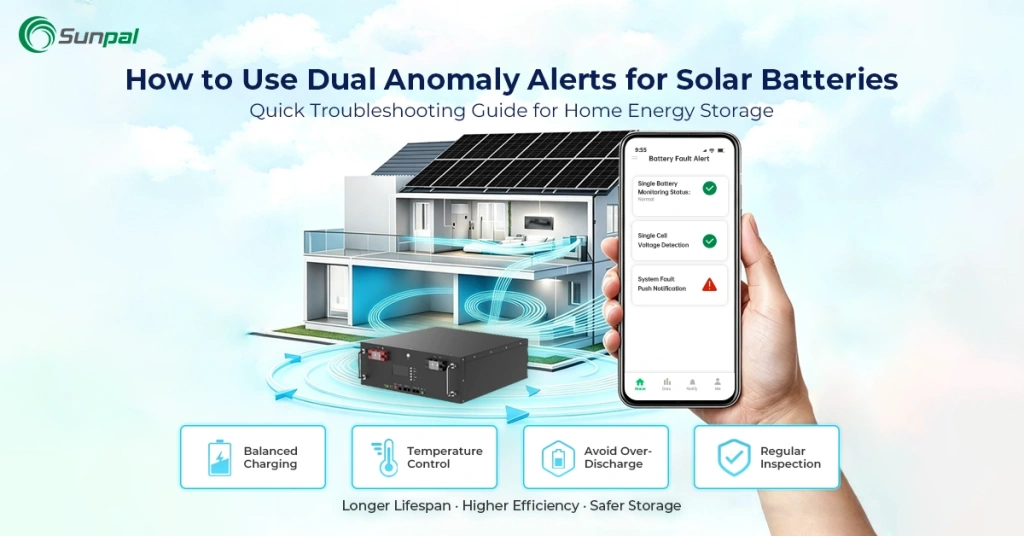
Une batterie au lithium 48V correctement entretenue peut fournir un stockage d'énergie solaire fiable pendant 10 à 15 ans, les batteries LiFePO4 atteignant généralement 3 000 à 6 000 cycles de charge selon les conditions de fonctionnement et les schémas d'utilisation.
La durée de vie de la batterie est influencée par plusieurs facteurs clés, notamment la température de fonctionnement, les paramètres de charge, la profondeur de décharge (DoD), la protection du système de gestion de la batterie (BMS), l'environnement d'installation et un entretien approprié. Entretien d'une batterie LiFePO4 pratiques.
Comparé aux batteries traditionnelles au plomb, Batteries solaires LiFePO4 nécessitent moins d'entretien et offrent une efficacité plus élevée, une durée de vie plus longue et une meilleure sécurité. Cependant, le respect de bonnes pratiques d'entretien peut améliorer encore les performances de la batterie, prolonger sa durée de vie et maximiser votre investissement à long terme dans le stockage d'énergie solaire.
Comprendre la tension et la configuration des cellules des batteries LiFePO4 48V
A batterie LiFePO4 48V est typiquement construit avec 16 cellules LiFePO4 connectées en série (16S). Chaque cellule LiFePO4 a une tension nominale de 3,2V, donc une configuration 16S fournit une tension de batterie nominale de 51,2V (3,2 V × 16). Une fois complètement chargée, chaque cellule atteint 3,65 V, résultant en une tension de charge maximale d'environ 58,4V.
Comprendre la structure de la tension de la batterie permet d'assurer un bon paramètres de chargement, protection BMS et compatibilité système, Comprendre la structure de tension de la batterie permet de garantir des réglages de chargeur appropriés, la protection du BMS et la compatibilité du système. Pour plus de détails sur la conception de la batterie, la configuration de la tension et l'optimisation du système, explorez notre Guide de batterie LiFePO4 48V.
Paramètres de charge recommandés pour une batterie LiFePO4 48V
| Paramètres | Paramètre recommandé |
|---|---|
| Tension nominale | 51,2V |
| Tension de charge maximale | 58,4V |
| Tension de flottement | Environ 53,6V |
| DoD recommandé | 80% ou moins |
| Courant de charge maximum | 0,5C recommandé |
Par exemple, une batterie lithium de 100Ah 48V supporte généralement un courant de charge maximum d'environ 50A à un taux de charge de 0,5C.
Maintenir la température de fonctionnement correcte
La température est l'un des facteurs les plus importants affectant la durée de vie et les performances des batteries au lithium. Maintenir la batterie dans une plage de température appropriée permet de réduire son vieillissement, d'améliorer son efficacité et d'assurer un fonctionnement sûr.
Effet de la température sur la durée de vie des batteries au lithium
La température optimale (environ 25°C) garantit les meilleures performances et la plus longue durée de vie de la batterie.
✅ Meilleures performances
Environ 25 °C
| Température | -10°C | 0 °C | 25°C | 40°C | 55°C |
|---|---|---|---|---|---|
| Performance | 70% | 85% | 100% | 90% | 70% |
Aperçu clé : Les températures extrêmes (trop froides ou trop chaudes) peuvent réduire la durée de vie de la batterie.
Maintenir une température modérée autour de 15°C–30°C est idéal pour les performances des batteries au lithium.
Plage de température recommandée dans différentes conditions de travail:
| Condition | Température recommandée |
|---|---|
| Température de fonctionnement idéale | 15°C–30°C |
| Autonomie de recharge | 0°C–45°C |
| Plage de décharge | -20°C–60°C |
| Température de stockage | 10 °C – 25 °C |
Les températures élevées peuvent accélérer les réactions chimiques internes, entraînant une perte de capacité plus rapide, un vieillissement accru de la batterie et des risques potentiels pour la sécurité. Évitez d'installer les batteries à proximité de sources de chaleur, en plein soleil ou dans des zones mal ventilées.
Les basses températures ralentissent le mouvement des ions lithium, ce qui réduit l'efficacité de la charge, augmente la résistance interne et diminue la capacité disponible. Il convient d'éviter de charger les batteries au lithium à des températures inférieures à 0 °C, sauf si la batterie est équipée d'une protection contre la charge à basse température ou d'une fonction d'auto-chauffage.
Une gestion adéquate de la température est essentielle pour prolonger la durée de vie de la batterie et maintenir des performances de stockage d'énergie fiables.
Éviter la surcharge et la décharge profonde
Bien que les batteries LiFePO4 soient conçues pour supporter des cycles de charge-décharge profonds, des surcharges ou des décharges profondes fréquentes peuvent accélérer leur vieillissement et réduire leur durée de vie globale.
Pour prolonger la durée de vie de la batterie, il est recommandé de maintenir son état de charge (SOC) entre 20% et 80% lors de son utilisation quotidienne. Évitez de la recharger fréquemment à 100% ou de la laisser se décharger complètement jusqu'à 0%.
Plage de SOC recommandée pour batterie LiFePO4 :
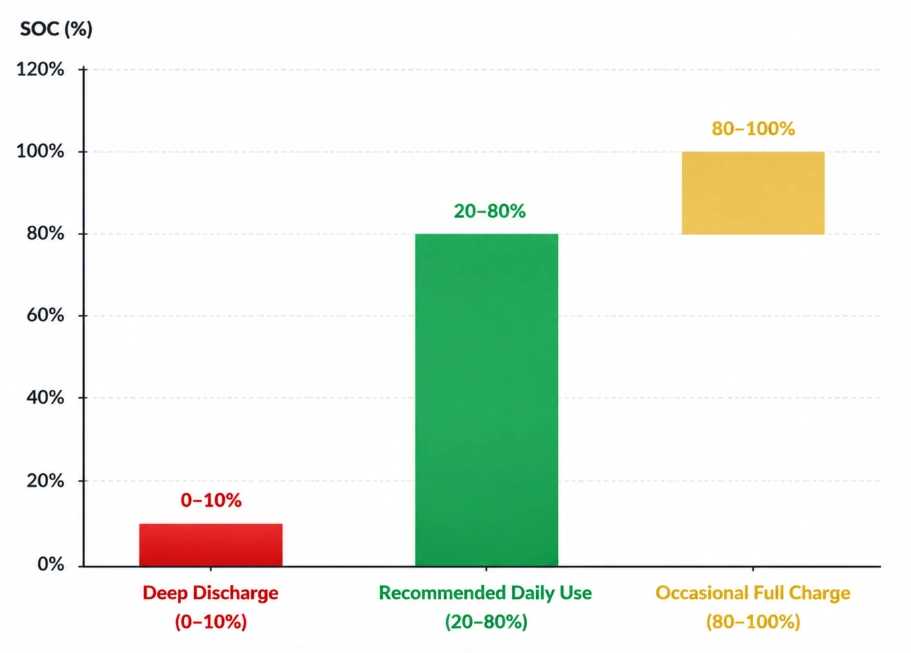
Une décharge profonde peut entraîner :
• Déséquilibre de cellule
• Capacité utile réduite
• Contrainte accrue de la batterie
Un système de gestion de batterie (BMS) fiable aide à protéger la batterie en prévenant les surtensions, sous-tensions, surintensités et les conditions de température excessive, assurant ainsi un fonctionnement à long terme plus sûr et plus stable.
Installer la batterie dans un environnement approprié
Des conditions d'installation appropriées jouent un rôle important dans le maintien des performances, de la sécurité et de la durée de vie des batteries au lithium. Un environnement adapté aide à prévenir les dommages causés par l'humidité, la surchauffe et une mauvaise ventilation.
Endroit sec
Garder les piles loin de :
• Pluie
Humidité
• Fuite d'eau
Condensation
L'humidité peut endommager les bornes de la batterie, les composants électroniques et les connexions de communication.
Bonne ventilation
Assurer
• Circulation d'air suffisante
• Espace suffisant autour de la batterie
• Dissipation de chaleur efficace
Éviter :
• Armoires fermées sans ventilation
• Installations bondées
Évitez l'exposition directe au soleil
Pour les installations extérieures, utilisez :
• Enceintes étanches
• Protection contre le soleil
• Systèmes de gestion thermique
Utilisez les bon câblages et connexions
Un câblage correct est essentiel pour maintenir l'efficacité de la batterie, la sécurité et des performances fiables. Des connexions défectueuses ou une sélection de câbles inappropriée peuvent augmenter les pertes d'énergie et créer des risques potentiels pour la sécurité.
Utiliser la bonne taille de câble
Évitez les câbles sous-dimensionnés, qui peuvent causer :
Chute de tension
Chaleur excessive
• Pertes d'énergie
Gardez la longueur du câble courte
Les câbles plus courts aident :
Réduire la résistance
Améliorer l'efficacité
• Minimiser les pertes de tension
Inspecter les bornes de la batterie
Vérifiez régulièrement :
• Connexions serrées
• Pas de corrosion
• Pas d'isolation endommagée
• Nettoyer les terminaux
Les connexions lâches ou endommagées peuvent entraîner :
• Augmentation de la résistance électrique
• Génération de chaleur
Perte de puissance
• Dangers potentiels pour la sécurité
Maintenir et configurer le système de gestion de batterie (BMS)
Le système de gestion de batterie (BMS) sert de "cerveau" à un système de batterie au lithium, aidant à surveiller les conditions de la batterie et à améliorer la sécurité, l'efficacité et la durée de vie.
Contrôle et configuration intelligents du système BMS de batterie au lithium
Équilibrage de cellules
Empêche :
Cellules surchargées
• Cellules sous chargées
Déséquilibre de capacité
Protection de Charge et de Décharge
Protège contre :
Surtaxe
• Décharge excessive
Courant excessif
• Courts-circuits
Surveillance de la température et de la SOC
Pistes :
• Température de la batterie
• État de charge et de décharge
• Capacité restante
Alertes de défaillance
Les systèmes BMS intelligents offrent :
• Notifications d'avertissement
• Enregistrements d'erreurs
• Surveillance à distance
Évitez de stocker longtemps sans utilisation
Les batteries au lithium nécessitent une préparation adéquate avant un stockage à long terme pour prévenir la perte de capacité et la dégradation des performances.
Avant stockage
Recommandé :
• Maintenez le niveau de charge de la batterie entre environ 40 et 60% SOC
• Débrancher les charges inutiles
• Conserver dans un endroit sec
• Vérifiez la tension de la batterie tous les 3 à 6 mois
Éviter :
• Laisser la batterie complètement déchargée
• Maintenir la batterie à un niveau de charge de 100% pendant des mois
• Stockage à des températures extrêmes
Se protéger contre les surtensions soudaines
Les appareils à forte consommation peuvent générer des pics de courant soudains susceptibles de solliciter excessivement la batterie et d'en altérer les performances.
Exemples courants :
• Climatiseurs
• Pompes à eau
Moteurs
• Compresseurs
Les surintensités importantes peuvent causer :
• Sollicitation des cellules de batterie
• Activation de la protection BMS
• Durée de vie du cycle réduite
Solutions :
• Choisissez un onduleur de puissance adaptée
• Vérifier les besoins en puissance de pointe
• Éviter un fonctionnement en surcharge prolongée
Veillez à mettre à jour régulièrement le micrologiciel et les paramètres système
Les systèmes modernes de batteries au lithium reposent sur la communication entre le système de gestion de la batterie (BMS), l'onduleur hybride et le système de gestion de l'énergie.
Les problèmes liés au micrologiciel peuvent entraîner :
• Comportement de charge incorrect
• Erreurs de communication
• Fausses alertes de protection
Recommandé :
• Utiliser des réglages d'onduleur compatibles
• Mettre à jour le micrologiciel si nécessaire
• Vérifier les protocoles de communication CAN/RS485
Programme d'entretien recommandé pour les batteries au lithium 48 V
Un entretien régulier permet de préserver Batterie lithium 48V performances, sécurité et fiabilité. Des contrôles simples effectués à intervalles réguliers peuvent contribuer à prolonger durée de vie d'une batterie solaire et prévenir les problèmes potentiels.
Calendrier d'entretien des batteries LiFePO4 :
| Fréquence | Vérifications recommandées |
|---|---|
| Mensuel | Vérifier le SOC, examiner les données BMS, surveiller la température, vérifier les performances de charge |
| Tous les 3 mois | Inspecter les bornes, vérifier les paramètres de charge, vérifier les connexions des câbles |
| Annuel | Vérifier l'environnement d'installation, l'état du boîtier, la compatibilité de l'onduleur |
Suite à un régulier Entretien de batterie 48V Le calendrier permet d'améliorer la fiabilité du système et de prolonger la durée de vie du service Batteries solaires LiFePO4.
Erreurs courantes qui réduisent la durée de vie des batteries solaires
Éviter les erreurs courantes est tout aussi important que l'entretien approprié. Les problèmes suivants peuvent accélérer le vieillissement de la batterie, réduire l'efficacité et raccourcir la durée de vie des systèmes de stockage d'énergie solaire.
7 erreurs courantes qui endommagent les batteries au lithium
Recharge à température de congélation
Exposition à une chaleur excessive
Paramètres de chargeurs incorrects
Décharge profonde
Mauvaise ventilation
Connexions de câble lâches
Ignorer les alertes BMS
La plupart des problèmes de durée de vie des batteries sont causés par une mauvaise charge, une mauvaise gestion de la température, une mauvaise installation ou une mauvaise utilisation. Éviter ces erreurs permet de maintenir la batterie en bon état de fonctionnement, en toute sécurité et efficacité.
Conclusion
Un entretien approprié est essentiel pour maximiser la durée de vie, la sécurité et les performances des systèmes de batteries au lithium. En maintenant des températures de fonctionnement adéquates, en utilisant les paramètres de charge corrects, en protégeant la batterie avec un BMS intelligent et en effectuant des inspections régulières, les utilisateurs peuvent obtenir des performances de stockage d'énergie plus fiables et plus efficaces.
En tant que fournisseur fiable de solutions d'énergie solaire, Sunpal propose des technologies de pointe Solutions de stockage de batteries LiFePO4 conçus pour les applications résidentielles, commerciales et hors réseau. Combinés à des pratiques de maintenance appropriées, les systèmes de batteries au lithium Sunpal aident les clients à obtenir un fonctionnement plus sûr, une durée de vie plus longue et une indépendance énergétique fiable.