


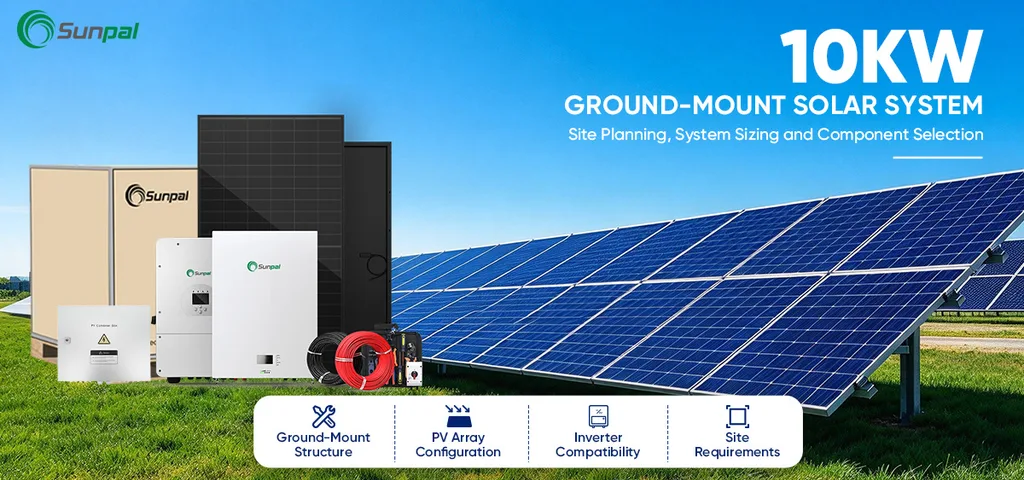
A 10kW ground-mount solar kit can be suitable for property owners, agricultural facilities, remote-site operators, and small commercial projects with sufficient land for a ground-mounted array. However, selecting the right kit requires more than matching a target capacity with a set of solar panels.
Buyers need to assess electricity demand, site conditions, equipment compatibility, mounting requirements, and whether battery storage is necessary. Those comparing different system types and configurations can also explore our guide to selecting a complete solar power system for a broader understanding of system design and purchasing considerations.
This guide focuses specifically on evaluating 10kW ground-mount solar kits, from comparing system configurations and checking key specifications to avoiding common design mistakes and verifying supplier terms before ordering.
What Problem Does a 10kW Ground-Mount Solar Kit Solve?
A ground-mounted solar system places PV modules on a dedicated support structure installed on the ground rather than directly on a building roof. This approach can be useful when a property has suitable open land, limited usable roof area, or site conditions that make a ground installation more practical.
Potential applications include rural properties, agricultural facilities, workshops, small commercial sites, and selected off-grid locations. The suitability of a 10kW system depends on the actual load profile, available solar resource, site conditions, and the intended operating mode.
A ground-mounted arrangement may provide greater flexibility in module placement and maintenance access than some rooftop installations. However, it also requires land, suitable foundations, structural design, and sufficient clearance for maintenance.
Before choosing a kit, buyers should answer three questions:
- Is the available land suitable for a ground-mounted array?
- Does the proposed system capacity align with the site's electricity demand?
- Will the system operate with the grid, independently of the grid, or as part of a hybrid configuration?
These decisions should guide equipment selection rather than being made after the kit has already been purchased.
Which 10kW Ground-Mount Solar Configuration Is Suitable?
The right configuration depends primarily on grid access, the site's operating requirements, and whether electricity must be available when solar generation is insufficient.
| Configuration | Typical application | Main equipment | Key consideration |
|---|---|---|---|
| Grid-connected | Properties with an available utility connection | PV modules, grid-compatible inverter, mounting structure, electrical protection | Interconnection approval and export limitations |
| Off-grid | Remote properties without reliable grid access | PV modules, off-grid inverter, battery storage, mounting structure, and potentially backup generation | Energy autonomy and periods of low solar production |
| Hybrid | Sites combining solar generation with grid, battery, or generator power | PV modules, compatible hybrid inverter, optional battery, and required controls | Operating modes, equipment compatibility, and total system cost |
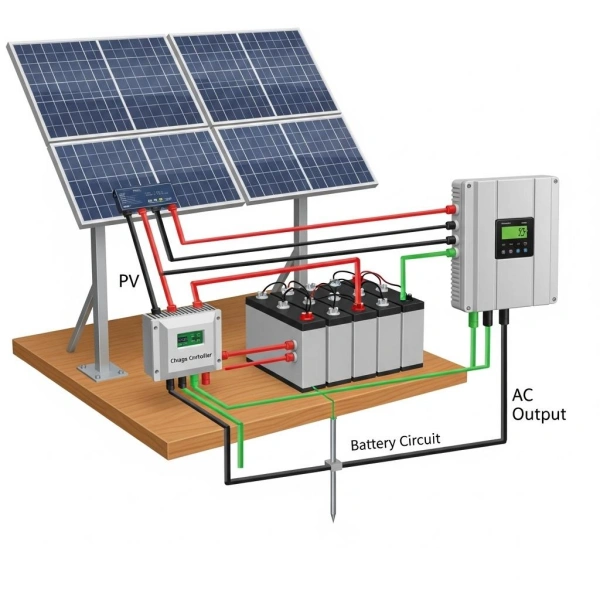
A 10kW PV array rating does not guarantee 10kW of continuous AC output. Actual power depends on irradiance, temperature, system losses, inverter ratings, and operating conditions.
The selected configuration should therefore reflect how the site will use electricity rather than relying on the advertised kit capacity alone.
When Is Battery Storage Necessary?
Battery storage is worth evaluating when electricity is needed after sunset, during grid outages, or at sites without dependable grid access.
For off-grid applications, buyers should estimate daily energy consumption, identify critical loads, and establish the required autonomy period. Battery usable energy determines how much electricity can be stored, while its power rating affects which loads it can supply simultaneously.
For grid-connected systems, batteries may be unnecessary when direct solar consumption and the available grid arrangement meet the project's objectives.
Storage should be specified according to these operating requirements, not automatically added to every 10kW kit.
Which Specifications Matter Most?
Before comparing quotations, identify the major equipment models and confirm that their specifications suit the proposed system design.
PV Modules
Check rated power, dimensions, electrical characteristics, applicable certifications, and warranty terms. The module count and string arrangement must match the intended array capacity and the inverter's electrical limits.
Solar Inverter
Confirm the inverter's operating mode, rated AC output, maximum DC input voltage, MPPT operating range, maximum input current, and phase configuration.
For off-grid applications, also check continuous output power and surge capability against the loads being supplied. For hybrid systems, verify battery compatibility and supported operating modes.
Ground-Mounting Structure
Assess whether the mounting system is suitable for the selected modules, site soil conditions, foundation design, local wind loads, and applicable structural requirements.
The layout should also account for shading, drainage, setbacks, maintenance access, and any site-specific restrictions. These factors can affect both feasibility and installation costs.
Battery and Supporting Equipment
If storage is included, verify chemistry, usable energy, charge and discharge power, operating voltage, battery management requirements, communication compatibility, and warranty conditions.
LiFePO4 batteries may be appropriate for some applications, but suitability depends on the complete battery-inverter configuration and operating requirements.
Finally, request a detailed bill of materials identifying whether cables, connectors, mounting accessories, grounding equipment, electrical protection, monitoring devices, and other required components are included.
How Should Buyers Assess a 10kW System's Capacity?
A target capacity is a starting point rather than a final sizing result. Buyers should establish the site's energy requirements before confirming the array size and associated equipment.
Buyer Sizing Checklist
Before requesting a detailed quotation, establish the following:
- Review electricity bills or available interval consumption data.
- Identify daily energy use, peak demand, and seasonal variations.
- Define the required operating mode and any backup objectives.
- Measure usable land and assess layout constraints.
- Confirm the target PV capacity and preliminary module configuration.
- Check inverter ratings and electrical design limits.
- Determine whether storage is needed and estimate its required usable energy and power.
- Review applicable permitting and grid-interconnection requirements.
- Consider future load growth and planned system expansion.
Estimate Module Quantity
A preliminary module count can be calculated by dividing the target DC array capacity by the rated power of each module.
For example, a 10kW DC array using 500W modules would require approximately 20 modules:
10{,}000\text{ W} \div 500\text{ W}=20
This calculation is illustrative. The final module count and string arrangement must be verified against the actual module and inverter datasheets, site layout, and applicable engineering requirements.
Match the Design to the Application
For grid-connected systems, daytime consumption and permitted electricity exports can influence the appropriate array size.
For off-grid systems, daily energy demand, peak loads, battery autonomy, and periods of limited solar generation are more critical.
The final configuration should be based on project-specific data rather than selecting a package solely because its advertised capacity matches an initial estimate.
Start with land area, soil conditions, shading, and drainage. A suitable site ensures safe installation, good performance, and long-term reliability.
Review daily energy consumption and peak loads before choosing system size. This step helps avoid buying an undersized or oversized 10kW system.
Select grid-connected, off-grid, or hybrid based on your energy goals, grid stability, and backup needs. The system type will affect all subsequent component choices.
Match modules, inverter, mounting structure, cables, and battery if required. Component compatibility is more important than simply copying a standard 10kW kit.
Check the equipment scope, exclusions, delivery schedule, warranties, and service items. A clear quotation reduces misunderstandings during procurement.
Confirm documentation, approvals, technical responsibilities, and acceptance criteria before ordering. This is the final checkpoint before procurement.
What Are the Common Design Mistakes?
Selecting a 10kW ground-mount solar kit requires more than matching panel capacity to an estimated electricity demand. Site conditions, electrical design, and installation requirements must also be assessed before the system is finalized.
- Choosing capacity without reviewing actual electricity demand. A 10kW PV array may not match the property's daily consumption, peak loads, or operating schedule. Review electricity bills and load profiles before determining the appropriate system size.
- Underestimating land and foundation requirements. Available land must accommodate the array layout, shading setbacks, access routes, and maintenance space. Soil conditions, drainage, slope, and local wind or snow loads may also affect foundation design and installation costs.
- Overlooking electrical compatibility. Module string design must remain within the inverter's permitted voltage and current limits under relevant operating conditions. Where batteries are included, verify compatibility with the inverter and the proposed operating configuration.
- Assuming the quoted kit covers all installation requirements. Mounting structures, foundations, grounding, electrical protection, wiring, permits, installation labor, and commissioning may be excluded. Identify these items before estimating the complete project cost.
- Ignoring grid-connection or off-grid operating requirements. Grid-connected systems may require utility approval and compliant interconnection equipment. Off-grid systems need to account for load demand, battery autonomy, backup power requirements, and periods of limited solar generation.
- Comparing quotations with different technical scopes. Two kits with similar advertised capacities may differ in equipment ratings, mounting arrangements, included accessories, and installation responsibilities. Normalize the technical scope before comparing prices.
Reducing these risks starts with a site assessment, a realistic load analysis, and a clearly defined system design before the final equipment package is selected.
What Should Buyers Confirm Before Ordering?
Before purchasing a 10kW ground-mount solar kit, buyers should confirm that the proposed equipment and installation scope match the site's energy requirements and physical conditions.
10kW Ground-Mount Solar Kit Checklist
- Energy demand: Review electricity consumption, peak loads, operating hours, and expected future demand.
- Site feasibility: Check usable land, shading, terrain, drainage, maintenance access, and applicable setback requirements.
- PV array design: Confirm module quantities, rated power, string configuration, and expected system capacity.
- Inverter compatibility: Verify DC voltage and current limits, operating mode, and relevant equipment compatibility.
- Battery requirements: If storage is needed, assess usable capacity, expected autonomy, backup loads, and documented inverter compatibility.
- Mounting and foundations: Confirm the proposed structure, foundation approach, site-specific loading requirements, and installation clearances.
- Electrical and safety scope: Identify grounding, protection devices, wiring, disconnects, monitoring, and other required equipment.
- Documentation and approvals: Review equipment datasheets, applicable certifications, installation instructions, and local permitting or interconnection requirements.
- Installation responsibilities: Clarify who is responsible for site preparation, engineering, installation, commissioning, and inspections.
- Total project cost: Account for equipment, foundations, shipping, installation labor, permits, and any excluded items.
Before authorizing the purchase, confirm that the final equipment list and installation scope reflect the actual site conditions. Any unresolved engineering assumptions should be reviewed before installation begins.
SUNPAL's 1.2MW Ground-Mounted Solar Project in Iraq
SUNPAL's 1.2MW ground-mounted solar project in Iraq provides a larger-scale reference for evaluating PV module deployment, fixed-tilt mounting arrangements, and site layout.
| Project detail | Information |
|---|---|
| Project location | Iraq |
| Installed PV capacity | 1.2MW |
| Solar panel technology | High-efficiency monocrystalline modules |
| Mounting structure | Fixed-tilt ground-mount system |
| Design considerations | Land utilization, installation access, and maintenance planning |
Although this project is considerably larger than a 10kW ground-mount solar kit, it illustrates why module placement, mounting configuration, and site access should be considered together when planning a ground-mounted installation.
The appropriate design for a smaller system will still depend on its specific land conditions, electricity demand, and engineering requirements.
How SUNPAL Energy Supports Solar Product Selection
Selecting a suitable solar kit requires matching the intended application with compatible equipment and clearly defined project requirements.
SUNPAL offers product options across PV modules, solar inverters, and battery systems for buyers evaluating different solar configurations.
For wholesale and OEM enquiries, buyers should also specify order quantities, technical documentation, customization requirements, and delivery expectations.
To discuss product options and project requirements, contact the SUNPAL team.
Frequently Asked Questions
Is a 10kW Ground-Mount Solar Kit Suitable for an Off-Grid Property?
It can be suitable if the PV array, inverter, and battery system are designed around the property's energy consumption, peak loads, and required autonomy. Suitability depends on local solar resources, seasonal demand, and the availability of backup power when needed.
How Many Solar Panels Are Needed for a 10kW Ground-Mount Solar System?
The number depends on the rated power of each module. For example, a 10kW DC array would require approximately 20 modules rated at 500W each. The final module count and string arrangement must also satisfy the inverter's electrical limits and the site's layout constraints.
Does a 10kW Ground-Mount Solar Kit Need a Battery?
Not necessarily. A grid-connected system may operate without battery storage, depending on its design and the property's requirements. An off-grid system generally needs storage or another reliable power source to supply loads when solar generation is insufficient.
How Much Land Is Needed for a 10kW Ground-Mount Solar Kit?
The required area depends on module dimensions, array layout, row spacing, shading, terrain, setbacks, and maintenance access. The usable land area should be assessed before finalizing the array layout and mounting design.
What Affects the Total Cost of a 10kW Ground-Mount Solar Kit?
Costs depend on equipment selection, mounting structures, foundation conditions, electrical protection, battery storage if required, shipping, installation labor, permitting, and site-specific engineering. Compare quotations using the same equipment scope and installation assumptions.