


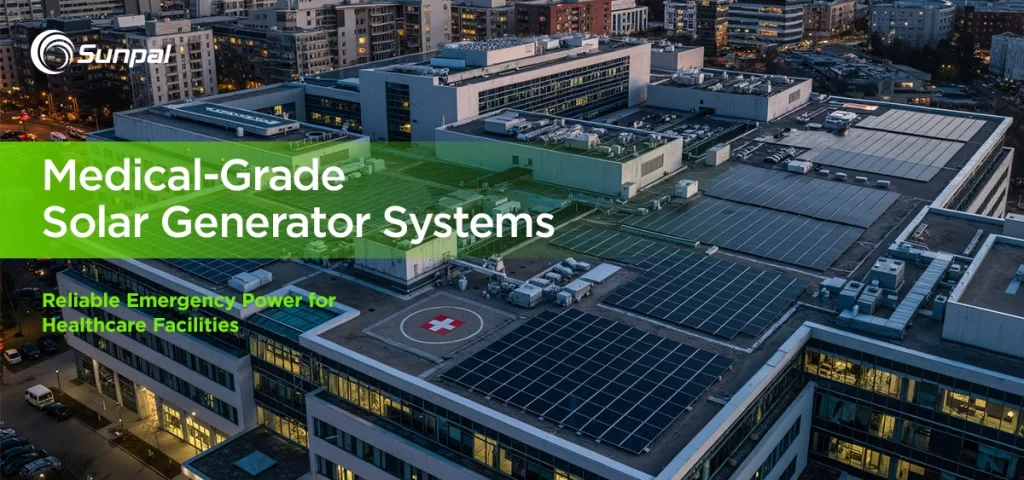
Introduction : L'alimentation électrique d'urgence, une nécessité pour la survie des soins de santé
Les systèmes de santé du monde entier sont confrontés à une nouvelle réalité. Les pannes d'électricité causées par des conditions météorologiques extrêmes, l'instabilité du réseau et le vieillissement de l'infrastructure sont de plus en plus fréquentes et de plus en plus longues. Pour les hôpitaux, les cliniques et les centres médicaux d'urgence, l'électricité n'est pas seulement une ressource opérationnelle, c'est une nécessité vitale.
Les équipements médicaux critiques tels que les ventilateurs, les pompes à perfusion, les appareils d'imagerie diagnostique et les systèmes de stockage de la chaîne du froid nécessitent une alimentation continue et de haute qualité. Des interruptions, même momentanées, peuvent entraîner des pannes d'équipement, des pertes de données ou des risques directs pour la sécurité des patients. En réponse, les opérateurs du secteur de la santé réévaluent les stratégies traditionnelles d'alimentation de secours et se tournent vers les systèmes de générateurs solaires de qualité médicale comme solution résiliente, propre et évolutive.
Défis en matière de fiabilité de l'alimentation électrique dans les environnements médicaux d'urgence
Les installations médicales sont soumises à des exigences électriques plus strictes que la plupart des bâtiments commerciaux. Les systèmes d'alimentation doivent fournir une tension stable, un contrôle précis de la fréquence et une activation de secours immédiate pour soutenir l'équipement électronique sensible.
Les solutions traditionnelles d'alimentation de secours présentent des limites évidentes :
- Les générateurs diesel dépendent d'une logistique de carburant qui tombe souvent en panne en cas de catastrophe.
- Les retards de démarrage peuvent provoquer des coupures de courant brèves mais dangereuses
- Le bruit et les émissions sont incompatibles avec les environnements de soins aux patients.
- Les exigences en matière de maintenance augmentent le risque opérationnel à long terme
Parallèlement, les systèmes de secours dépendant du réseau restent vulnérables aux pannes régionales et aux dommages causés à l'infrastructure. Ces défis ont accéléré la demande de systèmes de générateurs solaires conçus spécifiquement pour les applications de soins de santé d'urgence, où la fiabilité et la qualité de l'énergie ne sont pas négociables.
Qu'est-ce qui définit un système de générateur solaire de qualité médicale ?
Un système de générateur solaire de qualité médicale diffère fondamentalement des solutions d'énergie solaire destinées aux consommateurs ou aux loisirs. Ces systèmes sont conçus pour répondre à des normes de performance, de sécurité et de fiabilité de niveau clinique.
Les exigences de base sont les suivantes
- Sortie AC à onde sinusoïdale pure avec une distorsion harmonique ultra-faible
- Transfert d'énergie instantané sans interruption
- Architecture redondante de la batterie et de l'onduleur
- Priorité intelligente à la charge pour les équipements critiques
- Respect des normes internationales en matière d'électricité et de sécurité
En intégrant modules solaires photovoltaïques, Les systèmes de qualité médicale, avec leurs onduleurs avancés et leur stockage d'énergie au lithium, garantissent une alimentation électrique ininterrompue dans les situations d'urgence.
Graphique 1 : Impact de la panne d'électricité sur les activités de soins de santé
| Catégorie d'impact | Pourcentage d'incidents signalés |
| Arrêt ou dysfonctionnement de l'équipement | 38% |
| Interruption des services d'urgence | 24% |
| Défaillance de la chaîne du froid (vaccins/médicaments) | 17% |
| Perte de données et de systèmes de surveillance | 12% |
| Autres perturbations opérationnelles | 9% |
Aperçu clé :
Plus de 60% des incidents liés aux pannes affectent directement les équipements de survie ou les services d'urgence, ce qui souligne la nécessité d'utiliser des systèmes d'alimentation de secours de qualité médicale plutôt que des générateurs standard.
Architecture des systèmes de générateurs solaires de qualité médicale
Les systèmes de générateurs solaires de qualité médicale reposent sur une architecture étroitement intégrée conçue pour la stabilité, l'évolutivité et le déploiement rapide.
Production d'énergie solaire photovoltaïque
Les panneaux solaires à haut rendement sont optimisés pour :
- Conditions météorologiques variables
- Performances en faible luminosité
- Chargement continu pendant la journée en cas d'urgence
Systèmes d'onduleurs de qualité médicale
Les onduleurs sont conçus pour fournir
- Sortie de tension stable
- Contrôle précis de la fréquence
- Commutation transparente entre les sources d'énergie
Stockage d'énergie par batteries au lithium
Les piles au lithium permettent :
- Réponse immédiate à la puissance
- Durée de vie élevée pour une utilisation fréquente
- Installation compacte dans les locaux à espace limité
Gestion intelligente de l'énergie
Des systèmes de contrôle avancés surveillent le flux d'énergie en temps réel et allouent automatiquement l'électricité aux charges médicales prioritaires.
Graphique 2 : Comparaison des solutions d'alimentation de secours pour les établissements de santé
| Critères | Générateur diesel | Sauvegarde du réseau | Générateur solaire de qualité médicale |
| Temps de démarrage | 10-60 secondes | Instantané | Instantané |
| Dépendance à l'égard des carburants | Haut | Haut | Aucun |
| Émissions | Haut | Faible | Zéro |
| Niveau sonore | Haut | Faible | Très faible |
| Stabilité de la qualité de l'énergie | Moyen | Haut | Très élevé |
| Demande de maintenance | Haut | Faible | Faible |
| Aptitude à l'utilisation d'équipements médicaux sensibles | Limitée | Modéré | Excellent |
Aperçu clé :
Les systèmes de générateurs solaires de qualité médicale fournissent une énergie instantanée, indépendante du carburant et propre, ce qui les rend particulièrement adaptés aux environnements médicaux d'urgence.
Scénarios d'application dans les domaines de l'urgence et de la santé
Les systèmes de générateurs solaires de qualité médicale sont adoptés dans divers établissements de soins de santé.
Hôpitaux et services d'urgence
Ces systèmes assurent le fonctionnement ininterrompu de :
- Unités de soins intensifs
- Salles d'opération
- Équipement de diagnostic et d'imagerie
Cliniques mobiles et hôpitaux de campagne
Soutien aux systèmes de générateurs solaires :
- Déploiement rapide dans les zones sinistrées
- Missions humanitaires et de secours
- Installations médicales temporaires
Centres médicaux ruraux et hors réseau
Dans les régions où l'accès au réseau n'est pas fiable, les générateurs solaires fournissent une alimentation électrique indépendante et continue, améliorant ainsi l'accessibilité et la sécurité des soins de santé.
Protection de la chaîne du froid dans le domaine médical
Un stockage stable alimenté par l'énergie solaire protège les vaccins, les produits sanguins et les produits pharmaceutiques sensibles à la température.
Graphique 3 : Croissance mondiale de l'adoption de l'énergie solaire dans le secteur de la santé
| Année | Estimation du nombre d'établissements de santé utilisant l'énergie solaire |
| 2020 | 18% |
| 2022 | 26% |
| 2024 | 35% |
| 2026 | 47% |
| 2028 | 58% |
| 2030 (projeté) | 68% |
Aperçu clé :
D'ici 2030, plus de deux tiers des établissements de soins de santé dans le monde devraient intégrer les systèmes d'énergie solaire, L'objectif est de mettre en place un système de gestion de l'information, fondé sur des objectifs de préparation aux situations d'urgence et de développement durable.
Facteurs industriels accélérant l'adoption des générateurs solaires à usage médical
Plusieurs facteurs structurels remodèlent les stratégies d'alimentation d'urgence dans le secteur des soins de santé :
- Augmentation de la fréquence des catastrophes naturelles et des conditions météorologiques extrêmes
- Pression réglementaire croissante en faveur de la réduction des émissions
- Baisse des coûts des panneaux solaires et des batteries au lithium
- Croissance des systèmes énergétiques décentralisés et des micro-réseaux
- Les politiques et les ONG soutiennent fermement les infrastructures de soins de santé propres
Par conséquent, les systèmes de générateurs solaires pour les urgences médicales sont de plus en plus considérés comme des infrastructures essentielles plutôt que comme des améliorations facultatives.
Sunpal'Le rôle de la Commission européenne dans le développement de l'énergie solaire à des fins médicales
Sunpal contribue à la transition énergétique dans le secteur de la santé en fournissant des solutions intégrées de générateurs solaires adaptées aux applications médicales et d'urgence.
Les capacités clés comprennent :
- Modules solaires photovoltaïques à haute performance
- Intégration avancée de l'onduleur et de la batterie
- Conception de systèmes personnalisés pour les environnements de soins de santé
- Respect des normes internationales de qualité et de sécurité
- Déploiement évolutif pour les hôpitaux, les cliniques et les unités mobiles
L'approche de Sunpal, axée sur le système, permet une fourniture d'énergie fiable dans des scénarios médicaux critiques tout en s'alignant sur les objectifs de durabilité à long terme.
Perspectives d'avenir : La prochaine génération d'appareils médicaux d'urgence
Les systèmes de générateurs solaires de qualité médicale évoluent vers plus d'intelligence et de flexibilité. Les développements futurs incluent :
- Gestion intelligente de l'énergie grâce à l'analyse prédictive
- Unités d'alimentation modulaires et rapidement déployables
- Intégration avec les micro-réseaux hospitaliers
- Architectures hybrides solaire-stockage pour les pannes prolongées
Alors que les systèmes de santé s'adaptent à l'incertitude croissante, les systèmes d'énergie solaire d'urgence deviennent la pierre angulaire d'une infrastructure médicale résiliente.
Conclusion
Les systèmes de générateurs solaires de qualité médicale répondent à l'un des défis les plus pressants du secteur de la santé : assurer une alimentation électrique ininterrompue et de haute qualité en cas d'urgence. En éliminant la dépendance au carburant, en réduisant les risques opérationnels et en fournissant une électricité stable, ces systèmes surpassent les solutions de secours traditionnelles dans les environnements médicaux critiques. Alors que la préparation aux situations d'urgence devient un élément central de la planification des soins de santé, les systèmes de générateurs solaires sont en passe de devenir un composant standard des installations médicales résilientes et prêtes pour l'avenir dans le monde entier.